Joanne Doss
Dr. DeathJoanne Doss is a mother, microbiologist, and central absence in the investigation that follows her death by suicide at forty-three. For months she had deteriorated without a diagnosis, withdrawing from her husband and children before traveling secretly to Lancaster and receiving Eldon Mate’s assistance. Her death is first discussed as a medical and moral puzzle; later evidence recasts it as the end of a family crisis shaped by illness, guilt, and harm she had inflicted on Becky Manitow.
Identity and Background
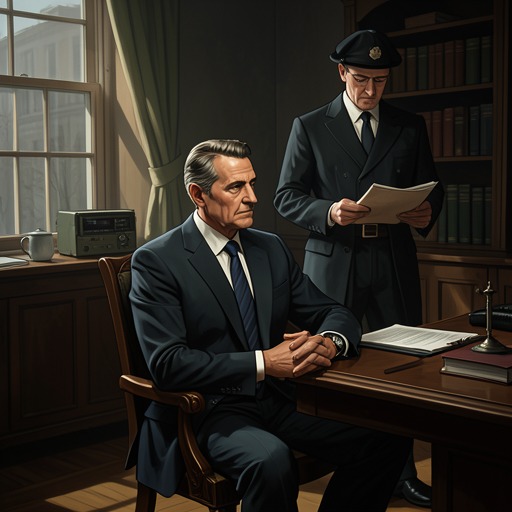
Joanne had been married to Richard Doss for more than twenty years. He had met her as Joanne Heckler in college and described their match as ideal, citing the length of their marriage as evidence. When Alex Delaware encountered him, however, Richard’s account of deep love sat uneasily beside his emotionally distant manner. He said he had not made love to Joanne for more than three years and spoke of her, though she had been dead only ninety-three days, as if she belonged to a remote past.
Joanne and Richard had two children, Eric Doss and Stacy Doss. Their family life had once included ordinary, energetic pursuits: Joanne danced, played tennis, and power-walked. She was also deeply involved in motherhood, according to Richard. Judy Manitow, a longtime friend and neighbor, had known Joanne since their first children were babies. The women attended Mommy and Me and preschool activities together, and their younger children, Becky and Stacy, spent time together as well. Judy remembered Stacy as seemingly grounded and initially thought a few sessions of grief counseling might be enough to help her after her mother’s death.
Joanne worked as a microbiologist on plant diseases, studying vegetable pathogens, molds, and fungi affecting food crops. Her work focused specifically on broccoli and was supported by a United States Department of Agriculture grant. Richard initially presented her death as a failure of medicine: doctors had subjected her to extensive tests, including scans, blood-related investigations, and two lumbar punctures, but had found no cause. Her work with pathogens prompted consideration of infection, allergies, or chemical sensitivity, but Richard said those possibilities had been investigated and dismissed.
Illness and Withdrawal
The decline began with fatigue. Richard recalled that Joanne had previously been energetic and physically active; at first, he mistook the change for flu or another passing virus and gave her space to rest. Her symptoms came to include joint pain, headaches, skin sensitivity, and continuing fatigue. As they persisted, she became difficult for him to reach, seeming mentally and emotionally elsewhere. Richard described her disengagement from him, the children, and the activities that had once mattered to her as the most consequential change.
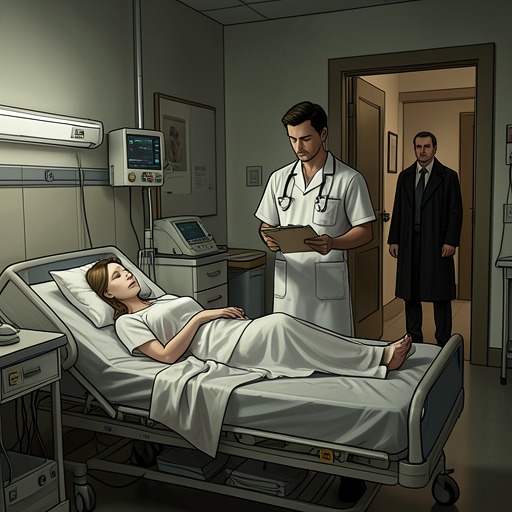
Several doctors examined Joanne, including Bob Manitow, who evaluated her as a favor to Richard despite generally avoiding treatment of people he knew socially. He referred her to an immunologist, who in turn sent her to another specialist. The sequence produced more examinations but no diagnosis. Richard later said that one neurologist had been searching without a clear reason for the tests. The absence of an explanation left the family with a body visibly and progressively changing, but no shared account of what was happening to it.
Eric Doss documented that change. Richard showed Alex Delaware a photograph taken by his son, who wanted a record of what had happened to his mother. In it, Joanne’s open eyes conveyed a condition Alex understood as something worse than despair: a living death. The image makes Eric’s anger legible without turning it into a clinical explanation. His sister later acknowledged that he had taken their mother’s illness especially hard, suffering from its beginning more than Stacy had.
The Secret Journey to Lancaster
Joanne’s decision to contact Eldon Mate was her own. Judy told Alex Delaware that Richard had not known about it: Joanne disappeared one night and was found the following morning in Lancaster. Richard learned of the death when police called him. He tried to reach Mate afterward, but Mate did not return his calls. Judy thought Richard’s exclusion from Joanne’s decision may have contributed to his hatred of Mate.
The public account described Joanne’s body as fully clothed in a room at the Happy Trails Motel, on the outskirts of Lancaster. Toxicological analysis found two drugs consistently used by Mate, and puncture marks suggested intravenous injection. There were no signs of forced entry or struggle. Classical music played in the room, and Joanne had eaten a last meal. The report identified her as a Pacific Palisades woman and said detectives suspected assisted suicide; it also called her the forty-eighth person whose death Mate had facilitated. Because Mate had avoided conviction, authorities considered criminal charges unlikely. The report establishes the circumstances surrounding her death, but it cannot settle what Joanne wanted or why she chose that particular place.
Lancaster carried a private history for Richard. He had spent long stretches there developing shopping centers, often traveling by helicopter partway and driving the rest of the way. He had repeatedly asked Joanne to visit, even suggesting a casual lunch and inexpensive food, but she always declined, citing the distance, traffic, heat, or other reasons. When Richard later grasped that she had died there, the reversal overwhelmed him: a place he had wanted to share with her became the site of her last journey. His abrupt, suppressed sob exposes pain that his earlier detached description of their marriage had concealed.
For Alex Delaware, Lancaster also becomes more than a location in a police account. The drive from Los Angeles runs through arid foothills and into the Antelope Valley toward the Mojave; at night, the view from a car would have been black, leaving time to think but little to see. His reflection that Joanne had to go to Lancaster emphasizes the destination as a deliberate choice. It does not prove her exact motive, but it sharpens the contrast between Richard’s old invitations and the solitary trip she finally made on her own terms.
Marriage, Guilt, and Becky Manitow
Richard interpreted Joanne’s death as a consequence of psychological collapse. He told Alex Delaware that she had chosen to drop out of life, blamed her for refusing psychiatric treatment, and said he had urged Richard to have her committed. In his view, depression might have been treated with medication and the children spared the aftermath. His certainty differs from the earlier uncertainty about her physical symptoms: although the medical investigations had found no cause, he now treated a psychological diagnosis as obvious. His account also assigns responsibility to Joanne, while his own estrangement from her and refusal to forgive remain part of the story Alex reconstructs.
That reconstruction turns on Joanne’s relationship with Judy and Becky. The families had been friends and neighbors, but Judy later insisted they had generally kept their private problems to themselves. She said she had referred Stacy to Alex because Richard reported that his daughter was drifting and she herself thought Stacy seemed depressed. When Alex pressed her about Joanne’s final days, Judy tried to limit what she would take on and denied having more to offer. Her refusal and defensiveness eventually give way to a different history.
Judy’s account links Joanne to Becky through tutoring arranged because Becky was capable but struggled with mathematics. In Judy’s recollection, she discovered Joanne and Becky together by the pool, while the math books lay wet on the deck and swimsuits had been left in a heap. She described this as a betrayal of the trust involved in leaving a child with someone the family had known for years and had asked to tutor. Joanne and Becky both claimed that it was the first time, but Judy did not believe them; she thought the disclosure explained changes she had noticed in Becky, including the girl’s earlier closeness to her and later withdrawal. The account establishes Joanne’s sexual abuse of Becky and gives the guilt behind her self-destruction a concrete source.
Alex’s confrontation of Judy frames Joanne’s death not as an uncomplicated act of friendship between Joanne and Mate, but as the endpoint of guilt that neither Richard nor Judy had forgiven. Alex suggests that Joanne had asked Judy to be present, and that Judy may not have minded seeing her reach the end. The evidence presented in the exchange makes this a charged interpretation rather than a neutral report: Judy resists, threatens Alex over confidentiality, and describes the betrayal that preceded the estrangement. The connection between abuse and suicide is therefore revealed through accumulated testimony and accusation, not through a confession from Joanne herself.
Death and Narrative Significance
Stacy remembered no warning. On the morning Joanne left, her mother called her in to say hello and told her she looked pretty, as she sometimes did. Stacy saw nothing different. Only afterward did she understand Joanne’s apparent passivity as a kind of prior self-erasure: in Stacy’s account, Mate did not create the wish to die but entered after Joanne had already withdrawn from life. Her interpretation counters the media image of the assisted-death doctor as the sole agent, while also revealing the limits of what her daughter could know about the secret decision.
Alex Delaware’s later reconstruction proposes that Joanne’s illness and death carried a punitive dimension. He sees a marriage in which Joanne had sinned, Richard had refused to forgive her, and Joanne had come to hate herself. Her final trip may have been an effort to take control of the last day of her life and to leave Richard with a destination he could not ignore—a final rebuke shaped by knowledge of his history there. The novel does not present that proposed intention as Joanne’s confirmed explanation. Instead, it sets it beside the documented secrecy of the trip, Richard’s grief, Stacy’s account of her mother’s withdrawal, and Judy’s revelation about Becky.
Joanne remains absent from the scenes in which her story is pieced together, and that absence governs how readers understand her. Richard’s medical narrative, Stacy’s memory, the motel report, and Judy’s eventual disclosure each illuminate different parts of a life none of them can fully recover. The result is a portrait in which suffering does not erase responsibility: Joanne’s unexplained physical decline is real, but so is the harm she inflicted. Her death ends her deterioration while leaving her family and neighbors to contend with a decision whose secrecy, motives, and consequences cannot be reduced to a single explanation.